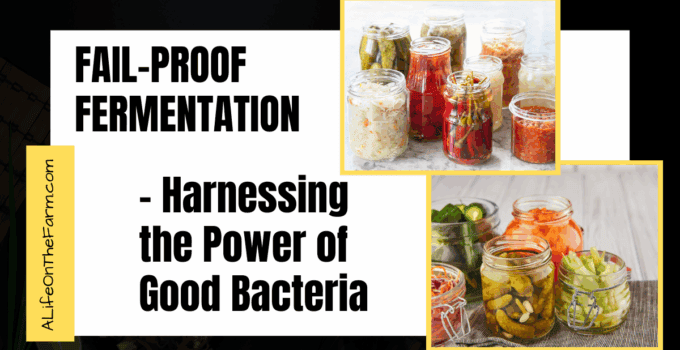
Fermentation might sound like something best left to the pros, but it’s one of the oldest and easiest preservation methods out there. With just salt, clean jars, and a bit of patience, you can transform fresh vegetables into tangy, probiotic-rich staples that are as good for your gut as they are for your taste buds.
🧬 Why Consider Fermentation?
- Naturally preserves produce without heat or electricity
- Enhances flavors—think sour, spicy, funky goodness
- Adds healthy probiotics to your diet
- Easy to start and low-cost
- No canner or freezer needed!
🧂 The Basics of Lacto-Fermentation
Fermentation occurs when beneficial bacteria convert sugars into lactic acid, creating an acidic environment that preserves food and wards off harmful microbes.
You’ll need:
- Fresh produce (preferably organic and unwaxed)
- Non-iodized salt (like sea salt or pickling salt)
- Filtered water (chlorine can inhibit fermentation)
- A glass jar, crock, or fermentation vessel
- A weight (fermentation pebble, clean rock, or even a water-filled bag)
- A lid (airlock or loosely placed; tight-sealing lids can build up pressure)
📋 General Fermentation Instructions
- Clean all jars, lids, and tools thoroughly.
- Wash and chop vegetables. Slice evenly if fermenting as spears or coins.
- Pack into jars tightly—leave an inch of headspace.
- Mix a brine of 1–3 tablespoons salt per quart of water.
- Pour brine over vegetables to completely submerge.
- Add a weight to keep veggies below the liquid.
- Cover loosely (or use an airlock lid).
- Let ferment at room temperature (60–75°F) for 3–14 days.
- Taste after a few days and move to the fridge when it’s “just right.”
Watch for bubbles, cloudiness, and that classic sour smell—all signs of good fermentation.


⚠️ Common Fermentation FAQs
- White film? Likely harmless kahm yeast. Skim it off.
- Mold? If it’s fuzzy or green/black, toss it.
- Too salty? Rinse before eating next time. Or reduce salt slightly in the next batch.
🥬 BONUS RECIPES
Simple Sauerkraut
Ingredients:
- 1 medium head green cabbage
- 1–1½ tbsp sea salt
- Optional: caraway seeds, garlic, or shredded carrots
Instructions:
- Shred cabbage and place in a large bowl.
- Sprinkle with salt and massage with hands until liquid is released.
- Pack tightly into a wide-mouth jar, pressing down firmly.
- Pour in the liquid to cover; add a cabbage leaf and weight.
- Ferment 5–14 days. Taste daily. Refrigerate when flavor suits you.
Spicy Fermented Carrots
Ingredients:
- 1 lb carrots, peeled and cut into sticks
- 2 cloves garlic, smashed
- 1 hot pepper (optional)
- 1 tbsp sea salt
- 2 cups water
Instructions:
- Dissolve salt in water to make brine.
- Pack carrots, garlic, and pepper into a clean jar.
- Pour brine to cover. Add weight and cover loosely.
- Let sit 5–7 days, then refrigerate.
Crisp, tangy, and perfect with sandwiches or on a cheese board!
🧼 Final Tips for Fermentation
- Start small—just one jar at a time.
- Label with the start date and any ingredients added.
- Try new flavors—beets with ginger, cucumbers with dill, or turnips with turmeric.
Fermentation brings the homestead pantry to life with bold flavors and real nutrition.
Next Up: Root Cellaring & Cool Storage
In the next article, we’ll explore one of the oldest (and most overlooked) methods of keeping food fresh: storing it underground—or in a modern makeshift version.
A Life on the Farm is beginning a new series of farm fresh food preservation ideas! We just completed a series of informational and instructional posts concerning various aspects of much needed cooking skills. Check them out and be sure to subscribe and come back for that and more!
MORE WAYS TO CONNECT
We also, as a homesteading family, have a variety of blogs that might interest you. A Life on the Farm focuses on the more personal side of the homesteading life. We discuss subjects like family, parenting, relationships, homeschooling, cooking, canning and so much more.
Two Oaks Farm Talk concerns the more technical side of homesteading. We discuss subjects like gardening, food prep, and farm building and construction with lots of tutorials!
Farm Raised Family is basically a hub for everything under the Two Oaks Farmstead umbrella. You can learn a great deal about all parts of the farmstead there. The Farm Raised Family blog focuses on financial matters such as budgeting, saving, and more and on current events affecting families.
You can also have a more in depth look at all that we do by visiting our Two Oaks Farmstead YouTube Channel and be sure to subscribe so that you don’t miss a thing!
Farm Life and Freedom is the new podcast we are in the process of launching! It is going to be so much fun! You could also check in with our Farm Life and Freedom Youtube Channel.
Two Oaks Farmstead is the farm store… the one that holds the umbrella! Check us all out and join us, not only on our blogs and Farm Life and Freedom podcast but come join the fun on Facebook, Instagram, Twitter… wherever you get social!